 Use FRP, Beat Corrosion


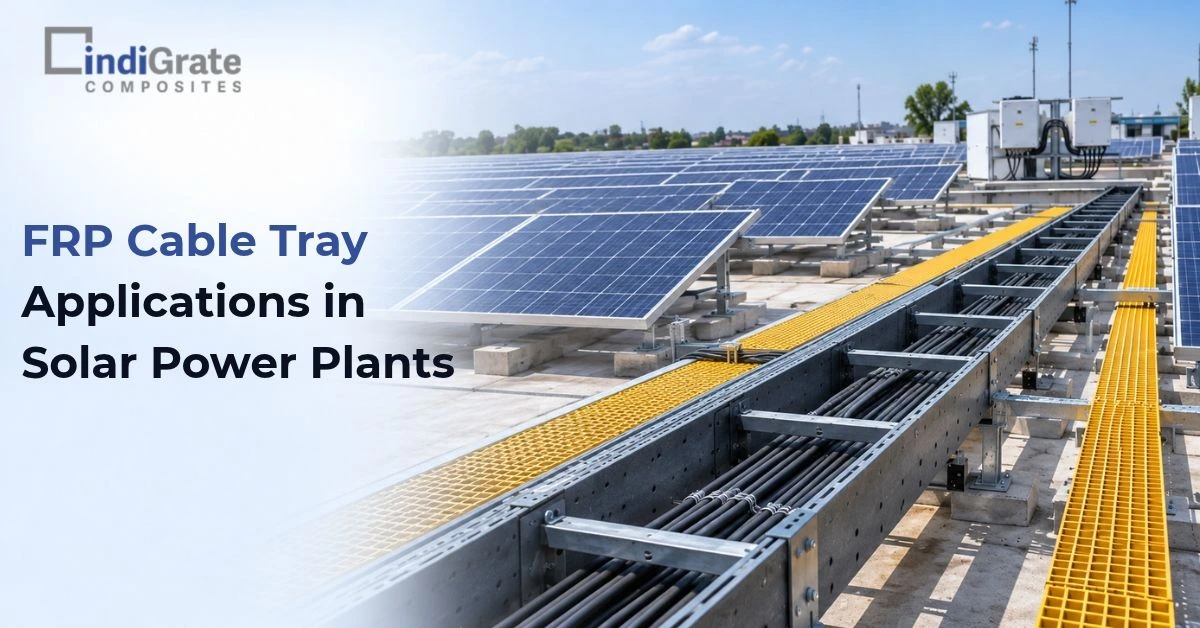
Solar power plants require reliable electrical infrastructure to transfer generated electricity safely and efficiently. Alongside solar panels, inverters, transformers, and other equipment, cable management plays an important role in maintaining an organised and accessible installation. Cables must be routed between solar arrays, combiner boxes, inverter stations, and electrical distribution systems while accounting for outdoor exposure and maintenance requirements.
In these environments, FRP Cable Tray systems offer an alternative to conventional metal cable support systems, particularly where corrosion resistance, lightweight construction, and electrical insulation properties are important. Their suitability depends on the installation environment, cable loads, tray design, and material specifications. Selecting an appropriate system can help improve cable organisation, simplify inspection, and support long-term performance across utility-scale solar projects.
Key Applications of FRP Cable Trays in Solar Power Plants
Solar Array Cable Routing
Solar installations contain extensive cable networks connecting photovoltaic modules to string combiner boxes and inverter systems. An FRP Cable Tray can help organise these routes, reduce cable clutter, and provide defined pathways for inspection and maintenance.
Inverter and Electrical Equipment Areas
Inverter stations and electrical distribution areas often contain multiple power and control cables. Properly planned tray systems help separate and support cables according to project requirements, making equipment access and maintenance more manageable.
Outdoor Cable Corridors
Solar plants commonly operate in open environments exposed to rain, humidity, dust, and temperature changes. A suitably specified FRP Cable Tray can resist corrosion in conditions where conventional metal trays may require protective coatings and periodic corrosion-related maintenance. Actual performance depends on the resin system and site exposure.
Control and Monitoring Systems
Solar plants use communication, instrumentation, and monitoring cables to track equipment performance. Separate routing arrangements, where required by electrical design, can help manage these cables and reduce interference risks associated with poor installation practices.
Planning cable management for a solar power project? Contact us to discuss your application and suitable FRP cable tray options.
Benefits of FRP Cable Trays for Solar Installations
- Corrosion resistance: Appropriate FRP materials can perform well in humid or corrosive environments.
- Lightweight construction: Lower weight can simplify handling and installation, subject to tray size and design.
- Electrical insulation: FRP is generally non-conductive, but it does not replace required grounding, bonding, or electrical safety measures for other equipment.
- Reduced maintenance: Corrosion-resistant materials may lower the need for rust-related repairs.
- Installation flexibility: Tray layouts can be planned around cable routes, equipment locations, and site access requirements.
What to Consider When Selecting FRP Cable Trays?
Before choosing an FRP Cable Tray system, project engineers should evaluate:
- Cable weight, tray loading, span, and support spacing.
- UV exposure, ambient temperature, moisture, and site-specific chemicals.
- Tray dimensions, fittings, covers, and cable separation requirements.
- Applicable electrical codes, fire-performance requirements, and project specifications.
- Installation methods, inspection access, and future cable expansion.
The selected tray must meet the project’s structural and environmental requirements. Manufacturer specifications and engineering calculations should guide final selection.
Frequently Asked Questions
Where are FRP cable trays used in solar power plants?
They can be used for cable routing near solar arrays, combiner boxes, inverter stations, control systems, and outdoor cable corridors.
Are FRP cable trays suitable for outdoor solar installations?
Suitable grades can be used outdoors when their UV resistance, temperature limits, and environmental performance meet site requirements.
Do FRP cable trays resist corrosion?
FRP trays generally resist rust and many corrosive environments, but performance depends on the resin system and specific chemical exposure.
Are FRP cable trays electrically conductive?
FRP is generally non-conductive. However, the installation must still follow applicable grounding, bonding, and electrical safety requirements.
What factors determine FRP cable tray selection?
Key factors include cable load, support span, tray dimensions, UV exposure, temperature, fire requirements, and installation conditions.
Conclusion
FRP cable trays can support organised cable routing across solar arrays, inverter stations, and outdoor cable corridors. Choosing the right FRP Cable Tray requires checking load capacity, environmental resistance, installation design, and applicable safety requirements. Proper selection helps maintain accessible, well-managed cable infrastructure throughout a solar power plant’s service life.
