Use FRP, Beat Corrosion


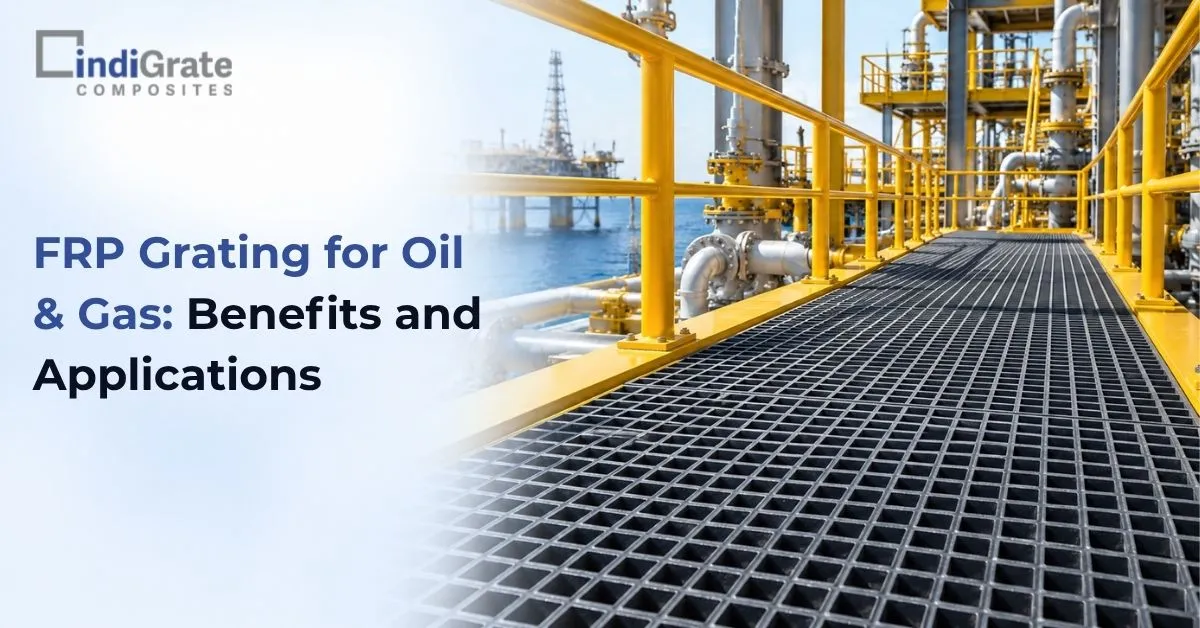
Oil and gas facilities operate in demanding environments where flooring, walkways, and access platforms must withstand moisture, chemicals, heavy foot traffic, and challenging operating conditions. Traditional steel grating can require regular maintenance when exposed to corrosive substances, particularly in offshore and processing environments.
A FRP Grating offers an alternative for applications where corrosion resistance, reduced structural weight, and safe access are important. Manufactured using fibre-reinforced polymer composites, it combines reinforcing fibres with a polymer resin matrix to provide strength and durability. Depending on the resin system and construction, it can be suitable for selected onshore and offshore oil and gas applications.
Understanding its benefits, limitations, and installation requirements helps engineers and facility operators determine where this material can meet their project needs.
What Is FRP Grating?
Fibre-reinforced polymer (FRP) grating is an industrial flooring material made from reinforcing fibres embedded in a polymer resin. Common configurations include moulded grating, manufactured with intersecting fibre-reinforced structures, and pultruded grating, assembled from load-bearing profiles and connecting components.
The appropriate FRP Grating type depends on the required load capacity, panel span, support arrangement, exposure conditions, and installation method. Resin selection also matters because different formulations offer different levels of chemical resistance, temperature tolerance, and fire performance.
Key Benefits of FRP Grating in Oil and Gas Facilities
1. Corrosion Resistance
Oil and gas facilities may experience exposure to moisture, salt-laden air, and various process chemicals. Suitable FRP Grating can resist corrosion in environments where unprotected metal may deteriorate. However, resistance depends on the resin system, chemical concentration, temperature, and exposure duration.
2. Lightweight Construction
FRP grating generally weighs less than comparable steel grating, which can simplify handling, transportation, and installation. Its lower weight may also help reduce the handling effort required during maintenance or replacement work.
3. Slip-Resistant Walking Surfaces
Depending on the surface finish, FRP grating can provide slip-resistant walking surfaces for industrial access areas. Selecting an appropriate surface texture is important in locations where water, oil, or other contaminants may be present. Site-specific slip-resistance requirements should always be assessed.
4. Electrical Insulation
FRP is generally electrically non-conductive, making suitable products useful in selected electrical and industrial areas. Nevertheless, the finished product’s electrical characteristics must be verified, and FRP grating does not replace required grounding, bonding, or electrical protection measures.
5. Reduced Corrosion-Related Maintenance
Because suitable FRP products resist corrosion, they may reduce the need for rust removal and protective coating repairs. Actual maintenance requirements depend on the operating environment, mechanical wear, installation quality, and inspection practices.
Looking for suitable grating for your industrial facility? Contact us to discuss your application and FRP product requirements.
Applications of FRP Grating in Oil and Gas
A FRP Grating can be considered for several access and flooring applications when its structural and material specifications meet site requirements.
- Offshore platforms: Selected walkways, access areas, and maintenance platforms exposed to marine conditions.
- Onshore processing plants: Access walkways and operating platforms in suitable process areas.
- Refineries and petrochemical facilities: Maintenance access areas where chemical compatibility and load capacity are verified.
- Water and wastewater areas: Walkways around treatment systems, drainage channels, and selected utility areas.
- Cable and equipment access zones: Platforms that support inspection and maintenance activities around industrial equipment.
The suitability of FRP grating for hazardous areas must be assessed against applicable fire, smoke, electrostatic, structural, and facility-specific safety requirements.
Factors to Consider Before Selecting FRP Grating
Before purchasing FRP Grating, evaluate these essential factors:
- Load capacity: Confirm expected loads, support spans, deflection limits, and applicable design requirements.
- Resin compatibility: Check resistance to the chemicals, concentrations, and temperatures present at the site.
- Surface finish: Select a suitable surface texture for the expected walking conditions.
- Fire performance: Verify required fire, smoke, and other safety ratings for the installation.
- Panel dimensions and fixing: Confirm panel sizes, support arrangements, fastening systems, and installation requirements.
- Inspection and maintenance: Establish inspection procedures appropriate to the operating environment.
Frequently Asked Questions
Why is FRP grating used in oil and gas facilities?
It can offer corrosion resistance, lower weight than comparable steel grating, and slip-resistant surface options for suitable industrial applications.
Is FRP grating suitable for offshore platforms?
Yes, selected systems can be used offshore, provided their structural capacity, resin compatibility, fire performance, and project approvals meet the required specifications.
Does FRP grating resist chemicals?
Its resistance depends on the resin system, chemical concentration, temperature, and exposure duration. Compatibility should be confirmed before use.
Is FRP grating stronger than steel grating?
Not universally. Performance depends on the product design, loading direction, support spacing, and material properties. Compare engineered load data for the intended application.
What types of FRP grating are available?
Common types include moulded and pultruded grating. The choice depends on loading requirements, panel dimensions, environment, and installation needs.
Conclusion
A FRP grating can provide a practical alternative to conventional metal grating in selected oil and gas applications where corrosion resistance, lower weight, and electrical insulation are important. Successful implementation depends on evaluating structural loads, chemical compatibility, surface safety, and fire-performance requirements. Careful product selection helps ensure that the grating meets the facility’s operational and safety needs.