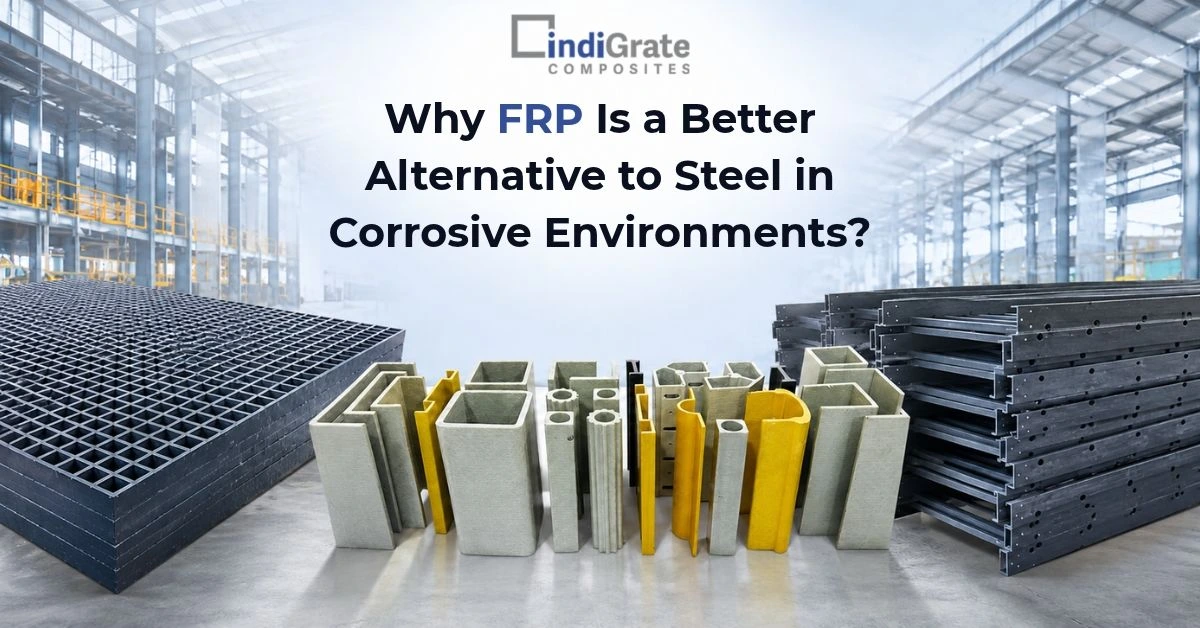
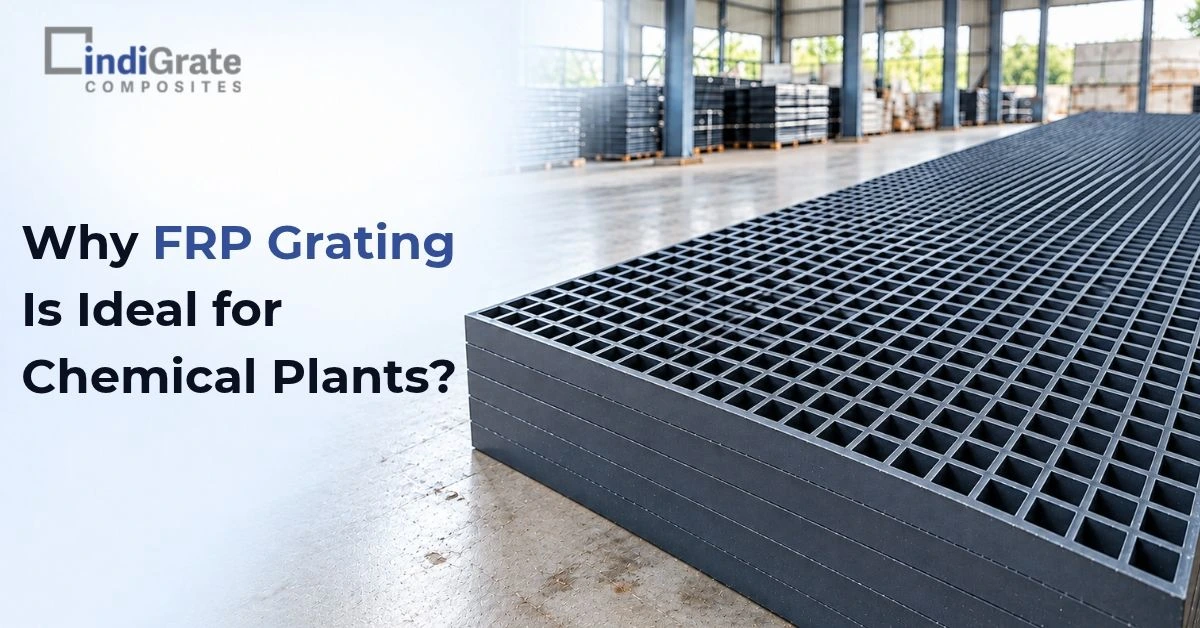
Use FRP, Beat Corrosion


Industrial structures require materials that can withstand demanding operating conditions without adding unnecessary weight or increasing maintenance requirements. Traditional materials such as steel and aluminium are widely used, but corrosion, handling requirements, and maintenance needs can influence material selection in certain environments.
Pultrusion offers an alternative by producing fibre-reinforced polymer profiles with consistent cross-sections and application-specific mechanical properties. FRP Pultruded Profiles are manufactured by pulling reinforcing fibres through a resin system and a heated shaping die, creating continuous structural components. These profiles are also known as FRP structural profiles and are used in industrial frameworks, platforms, support structures, and electrical infrastructure. Their suitability depends on the resin formulation, fibre reinforcement, profile geometry, loading conditions, and environmental exposure. Understanding these factors helps engineers select composite profiles that meet project requirements and support long-term structural performance.
What Are FRP Pultruded Profiles?
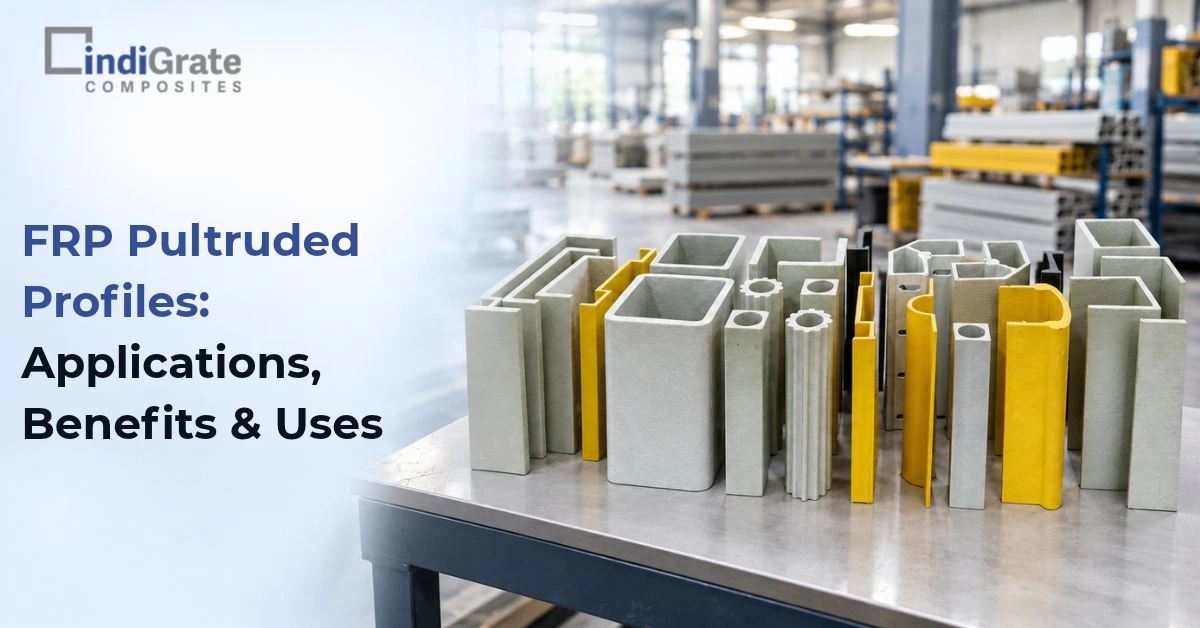
The FRP pultruded profiles are composite structural components made by combining reinforcing fibres, commonly glass fibre, with a polymer resin. During manufacturing, the fibres are impregnated with resin and pulled through a heated die, where the material takes shape and cures.
This continuous process produces profiles with consistent cross-sections, such as angles, channels, tubes, and other structural shapes. These components can be fabricated into frames, supports, walkways, and equipment structures according to engineering requirements.
Key Benefits of FRP Pultruded Profiles
Several properties make FRP Pultruded Profiles useful across industrial applications.
- Corrosion resistance: Suitable resin systems can resist moisture and many corrosive environments, depending on chemical exposure and operating temperature.
- Lightweight construction: Lower weight than many conventional structural materials can simplify handling, transportation, and installation.
- Mechanical strength: Fibre reinforcement provides structural performance when the profile and connections are correctly designed for the applied loads.
- Electrical insulation: FRP is generally non-conductive, making it useful in selected electrical infrastructure applications. Required electrical safety measures still apply.
- Reduced maintenance: Corrosion resistance can reduce the need for rust-related repairs and protective coatings in suitable environments.
- Design flexibility: Different profile shapes and lengths can be selected or fabricated to meet project requirements.
Applications of FRP Pultruded Profiles
The FRP Pultruded Profiles are used in various industrial environments where corrosion resistance, low weight, and structural performance are important. Their suitability depends on material specifications and project requirements.
Chemical Processing Plants
Chemical facilities may use composite profiles for structural supports, access platforms, equipment frames, and walkways. Material selection should account for the chemicals present, their concentrations, and operating temperatures.
Water and Wastewater Treatment
Treatment facilities often experience persistent moisture and exposure to treatment chemicals. Properly specified profiles can be used in support structures and access systems where corrosion resistance is important.
Solar and Renewable Energy
Solar installations may use FRP structural members for selected equipment supports, frameworks, and access structures. Design considerations include wind loading, mechanical loads, UV exposure, and connection requirements.
Electrical and Industrial Infrastructure
The FRP profiles can support cable management structures, equipment frames, and selected utility installations. Their insulating properties may be advantageous in suitable applications, but they do not replace required grounding or electrical protection systems.
FRP Pultruded Profiles vs Conventional Materials
The FRP Pultruded Profiles offer specific advantages for applications where low weight, corrosion resistance, and electrical insulation are important. However, the right material depends on the operating environment, structural requirements, and project budget.
| Factor | FRP Pultruded Profiles | Conventional Steel |
|---|---|---|
| Weight | Generally lightweight | Generally heavier |
| Corrosion | Depends on resin and exposure | May require corrosion protection |
| Electrical properties | Generally non-conductive | Electrically conductive |
| Maintenance | Can reduce corrosion-related upkeep | May require coating maintenance |
| Design | Requires composite-specific engineering | Uses established steel design methods |
The better choice depends on loading, cost, environmental exposure, fabrication needs, and applicable design standards.
Common Uses of FRP Pultruded Profiles
FRP pultruded profiles are used to build lightweight structural components in environments where corrosion resistance, electrical insulation, and manageable maintenance are important.
- Structural Frames: Used in selected industrial frameworks, equipment supports, and structural assemblies where the profile’s load capacity meets design requirements.
- Walkways and Platforms: Used as structural members in access platforms, maintenance walkways, and handrail systems, often alongside suitable FRP grating.
- Cable Support Structures: Used in frames and supports for cable management systems in industrial and electrical installations.
- Chemical Processing Equipment: Used for selected supports and structural components in chemical plants, subject to resin compatibility and operating conditions.
- Water and Wastewater Facilities: Used in suitable support structures and access systems exposed to moisture and treatment chemicals.
- Solar and Renewable Energy Projects: Used in selected support frameworks and structural assemblies where weight, environmental exposure, and mechanical loading are considered.
The suitability of FRP Pultruded Profiles for each use depends on profile geometry, structural loads, connection design, resin system, and site conditions. Engineering specifications should be checked before selecting profiles for a particular application.
Looking for suitable composite profiles for your industrial project? Contact us to discuss your application and structural requirements.
What to Consider Before Selecting FRP Profiles?
Before specifying FRP Pultruded Profiles, engineers should assess:
- Required loads, spans, deflection limits, and connection details.
- Resin compatibility with chemicals, moisture, and operating temperatures.
- UV exposure, fire-performance requirements, and environmental conditions.
- Profile dimensions, fabrication requirements, and installation methods.
- Manufacturer specifications, test data, and relevant structural design standards.
Correct specification is essential because composite performance varies with material formulation, profile geometry, and application conditions.
Frequently Asked Questions
What are FRP pultruded profiles?
They are fibre-reinforced polymer structural components manufactured by pulling resin-impregnated fibres through a heated die to create continuous profiles.
Are FRP pultruded profiles the same as FRP structural profiles?
Yes. FRP structural profiles manufactured through pultrusion are commonly called FRP pultruded profiles.
Where are FRP pultruded profiles used?
They are used in chemical plants, wastewater treatment facilities, electrical infrastructure, industrial platforms, equipment frames, and selected renewable energy applications.
Are FRP pultruded profiles corrosion-resistant?
They can resist many corrosive environments, but suitability depends on the resin system, chemical concentration, temperature, and exposure conditions.
Are FRP pultruded profiles suitable for load-bearing structures?
Yes, in appropriately engineered applications. Profile strength, stiffness, span, connections, and design loads must be evaluated before use.
Conclusion
The FRP Pultruded Profiles provide a lightweight, corrosion-resistant option for selected industrial structures, electrical infrastructure, and renewable energy applications. Their suitability depends on structural design, material compatibility, and operating conditions. Careful evaluation helps ensure reliable performance and manageable maintenance over the intended service life.